Who I am
I'm Eric Pansegrau — a father, a pet owner, a martial artist, and a technology professional. I'm not a veterinarian or a doctor, and I'll never pretend to be. What I am is someone who refuses to stop at "we don't know."
I spent years in technology, where you're trained to look at data, find patterns, and solve problems. I spent time as a general contractor in Lake Tahoe. I've spent a lifetime in martial arts. All of those things teach you the same discipline: be methodical, be persistent, and don't stop until you find the answer.
I'd already lived that out before any of this. When a doctor wanted to put me on blood-pressure medication immediately, I said no, went looking for the root cause, found it, and resolved it without drugs. That experience taught me something I never forgot: managing a symptom is not the same as fixing what's causing it.
Sarah
My daughter Sarah was seventeen when I found her on the bathroom floor, shaking, lips turning blue, not breathing. I was positioning my hands to start CPR when she gasped for air. She had stopped breathing — briefly — and come back. As I write this, years later, I still tear up.
The diagnosis came quickly: idiopathic epilepsy. Idiopathic means "unknown cause." The recommendation was medication for the rest of her life.
I refused to accept unknown. I started researching — nights, weekends, rabbit holes, dead ends, a folder that kept getting thicker. I'm not a neurologist or a biochemist. But the brain is a system, and when a system isn't working, there's a reason.
Sarah had three seizures over five weeks in the summer of 2021. The first on July 18, the last on August 23, the day before our visit to Stanford. In the time between the first seizure and that visit, I had already identified what I believed was a contributing cause and started treating it. Keppra was prescribed at Stanford as a safety net. Over five years later she is still seizure-free and off all anti-epileptic medication. I cannot tell you with certainty what stopped the seizures. I can tell you I kept looking. Her full story, the testing, the doctors, the timeline, is documented at sarahs-grand-mal-story.com.
The connection
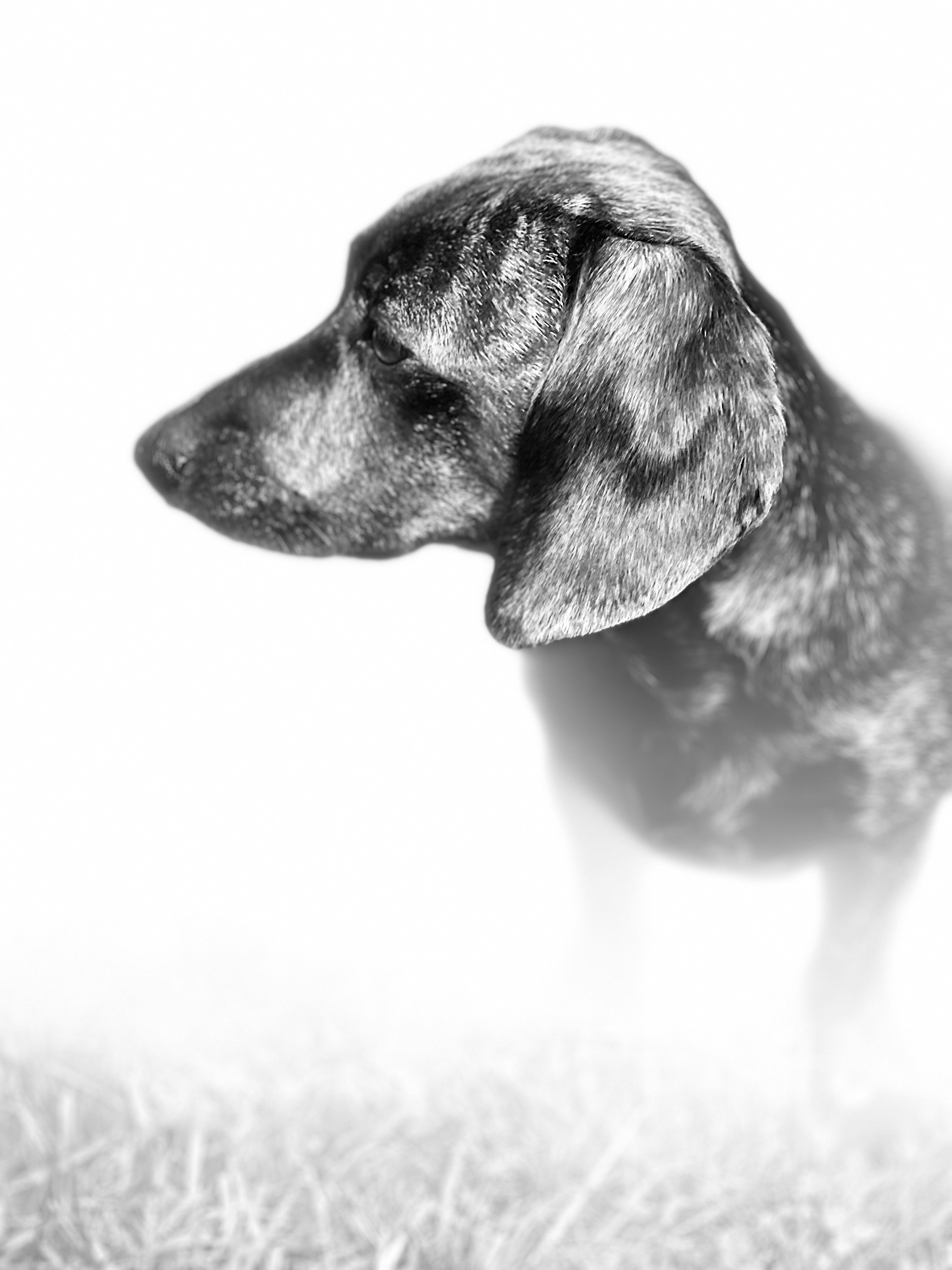
When I saw Koe walking in confused circles in 2024, I didn't start from zero. I recognized the warning. I recognized the pattern. The basic biochemistry that had mattered for my daughter isn't human-specific — it's shared across mammals. So I researched the canine version, scaled it carefully, and applied it.
A daughter whose hands jumped before a seizure. A dog who came to find me before one. The same building pressure, announcing itself in two different languages. Sarah is the reason I knew what to look for in Koe.
This is the most honest account I know how to give. I hope it helps.
— Eric Pansegrau, Copley, Ohio